BeyondBackyard
Astrophotography, deep-sky imaging, observatory life, reviews and builds. Capturing the cosmos from the Backyard to Remote Skies.
Meet the Creators
Two imagers, two backyards, one shared obsession with the night sky.

Phil Aichinger
/AstroPhilthCo-Founder / Astrophotographer
AstroPhilth is a UK-based astrophotographer who began his journey in 2020, emerging from lockdown with a self-taught passion for deep-sky imaging. Drawing from a background in film and project-based storytelling, he approaches astrophotography with a balance of realism and creative expression. Working across multiple imaging systems, designing his own software tools and contributing to large collaborative datasets, AstroPhilth is building towards a future of shared remote observatories with friends.

Jamie Macdougall
/backyardspacedudeCo-Founder / Astrophotographer
Jamie started astrophotography in 2015 using basic backyard equipment, steadily refining and upgrading his systems over the years into the advanced imaging capabilities he works with today. Moving his imaging systems to a remote location frees his backyard up to focus on a new passion: visual exploration of the night sky.
Observation Log
Every image is a record of time, place, and conditions. Explore the capture metadata behind each observation.
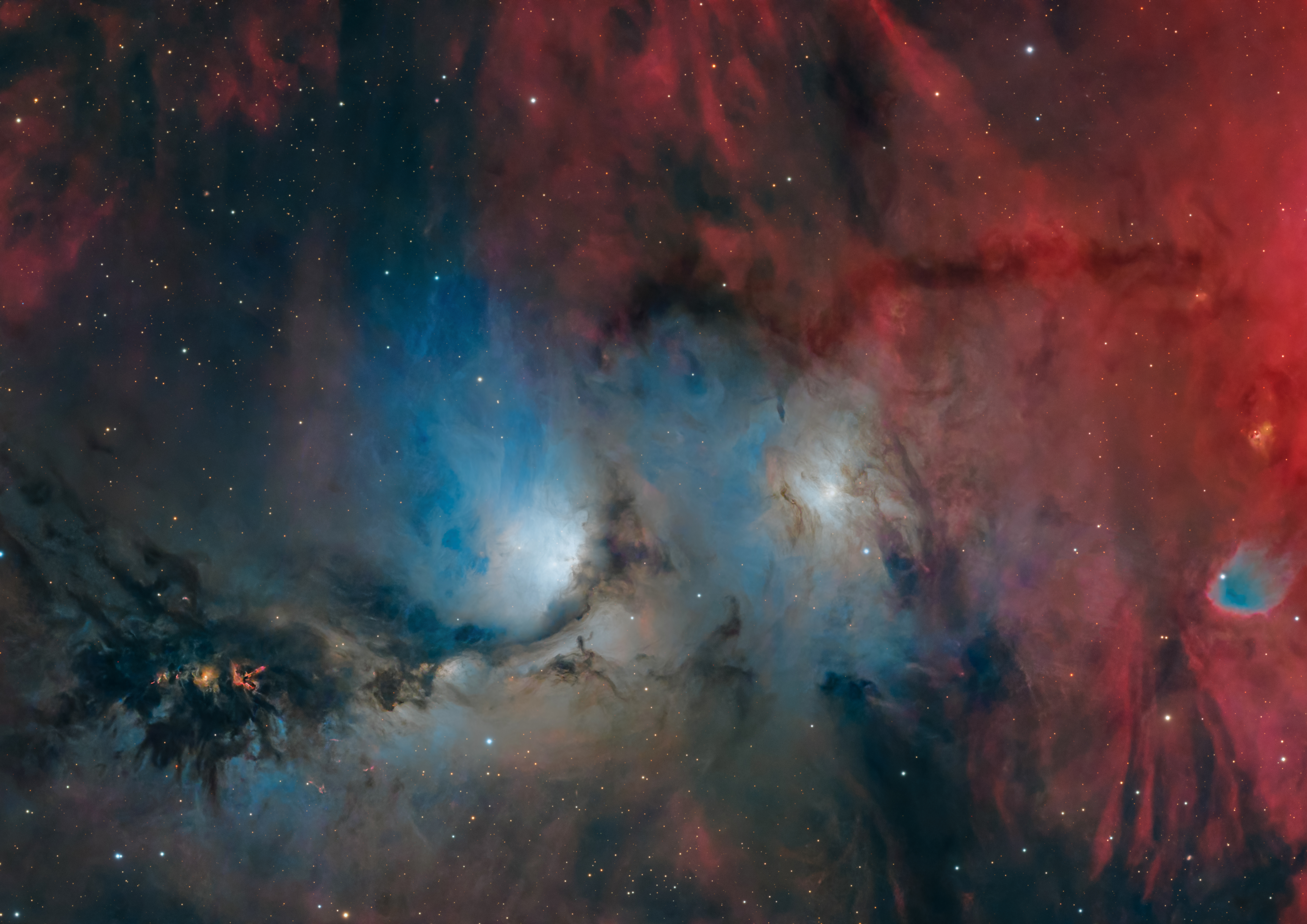
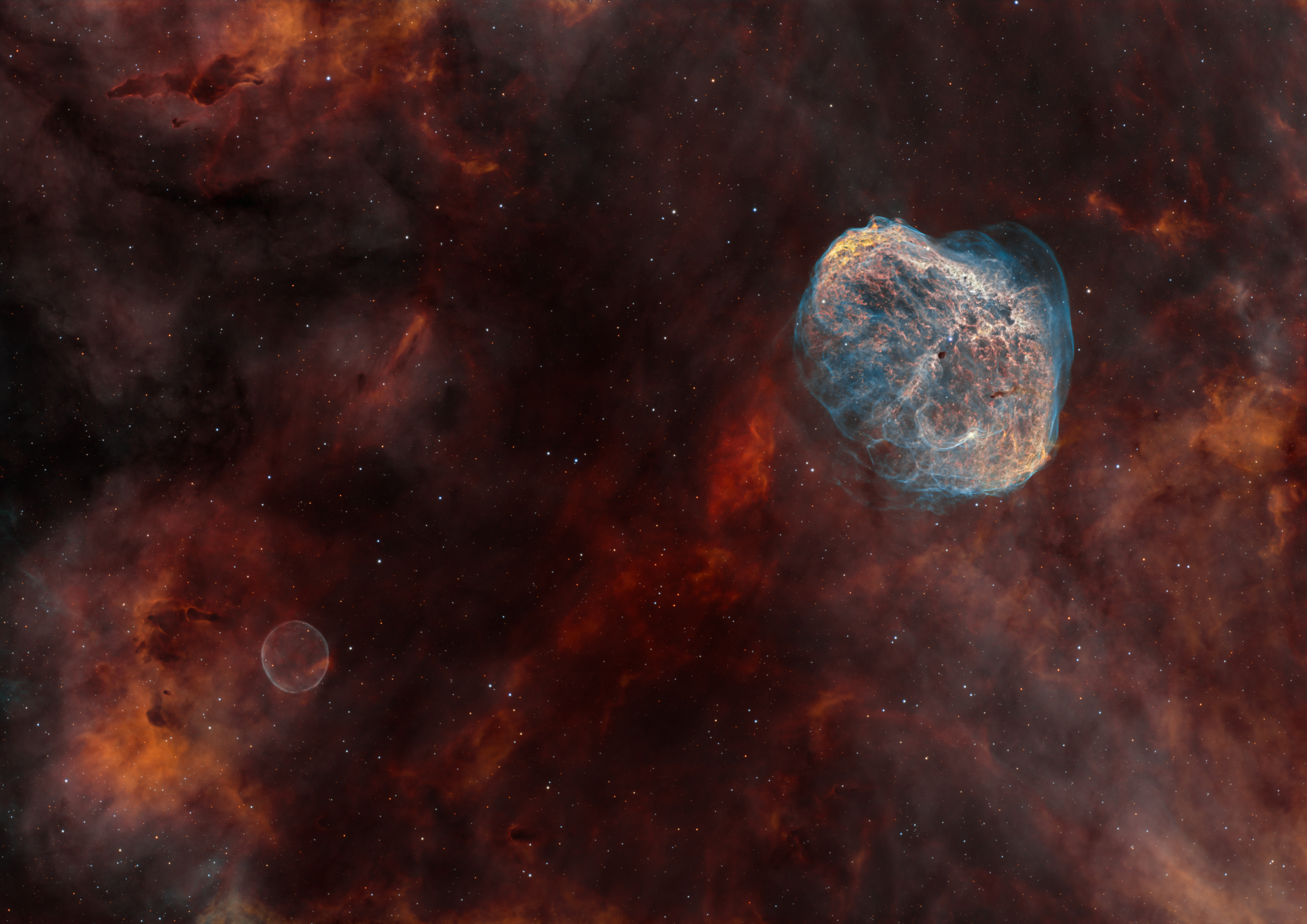
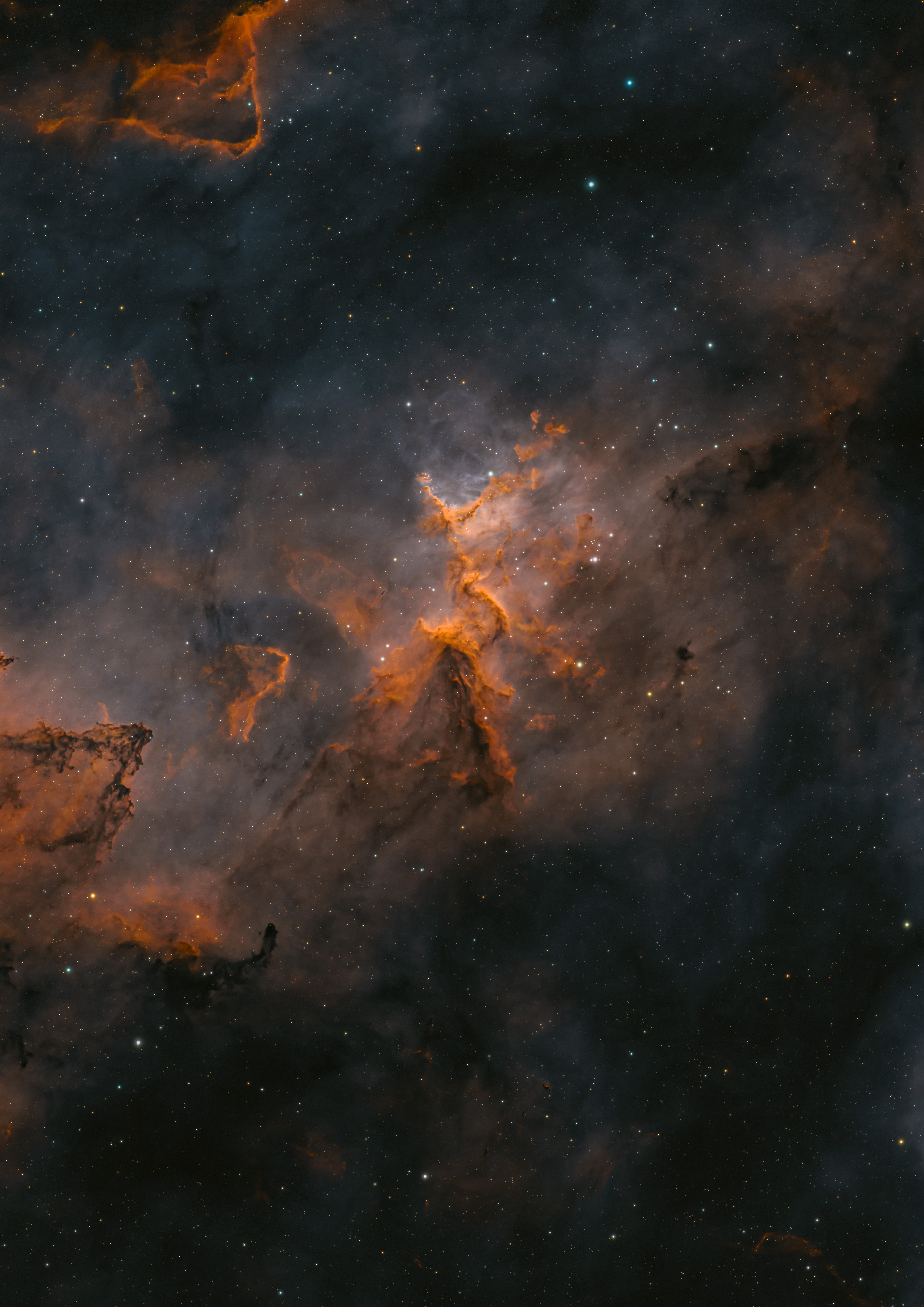
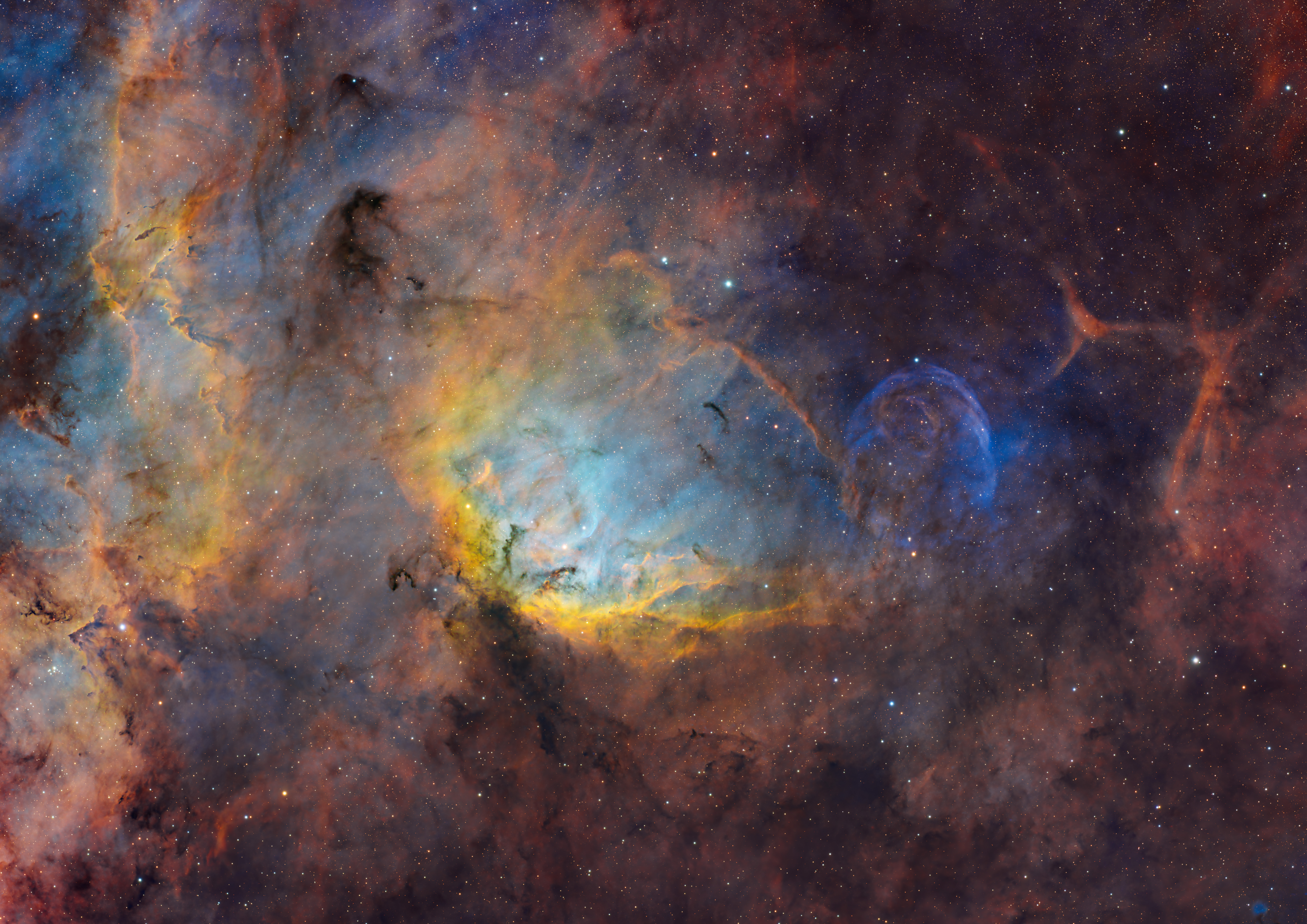

Print Store
Gallery-quality astrophotography prints. Each image is produced on archival paper with colour-calibrated output.

Messier 78; Ghosts of Starlight (Framed)
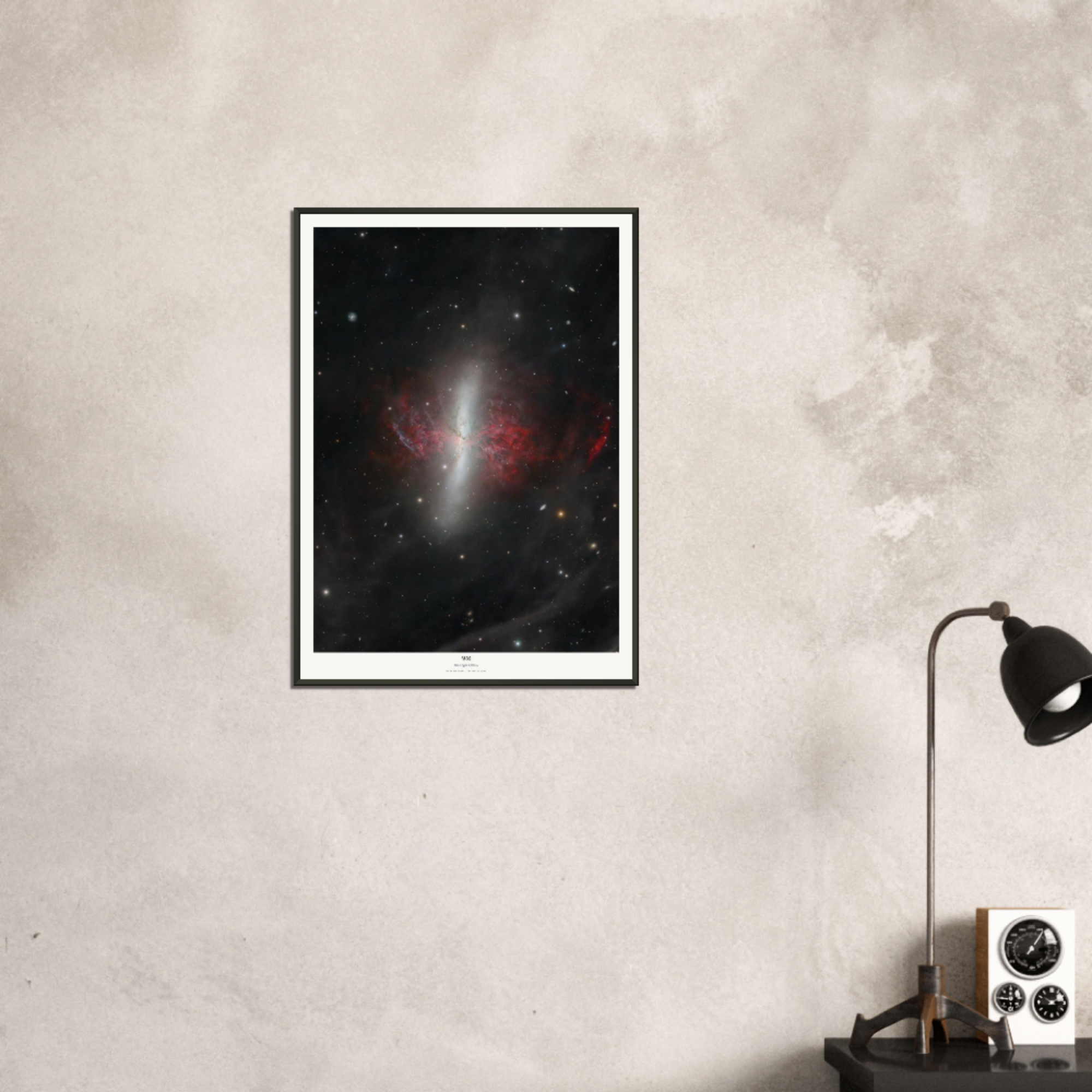
Image DescriptionMessier 78, also catalogued as NGC 2068, is a reflection nebula embedded within the Orion B molecular cloud complex. Unlike emission nebulae, which produce their own characteristic glow when gas is ionised, M78 shines primarily by reflecting and scattering the light of young, hot stars embedded within the surrounding cloud of dust. The result is the distinctive blue glow that gives M78 its appearance — and its rather appropriate nickname, the Casper the Friendly Ghost Nebula.The two bright stars at the heart of M78 illuminate the surrounding dust, while dense clouds and dark lanes absorb the light from behind. These structures give the nebula its intricate appearance, with seemingly solid walls of dust separating pockets of reflected starlight.But M78 is more than a particularly photogenic reflection nebula. It is part of an active star-forming environment, where dense molecular clouds are giving birth to new generations of stars. Deep observations reveal a much more complex region than the familiar blue glow suggests, with young stellar objects and associated emission extending throughout the surrounding cloud.The addition of over 30 hours of Hα data allowed us to bring out some of the much fainter hydrogen emission surrounding the reflection nebula. Combined with the broadband LRGB data, this gives the image a view of M78 that goes beyond its familiar blue appearance and reveals some of the wider structure in which this small group of young stars is embedded.Imaging SystemOur twin 130mm APO quadruplet refractors are mounted on a strong custom adaptor plate, riding securely on a Paramount ME. At the rear of each OTA is a rotator and EFW with complete Antlia LRGB + 3nm SHO filter sets, these in turn feed the photons into twin ASI2600MM Pro cameras. Though the Paramount is capable of unguided imaging, we opted for OAG to support dithering. Focus is automated for each OTA through ZWO EAFs. Power distribution and USB control is managed through a Pegasus UPB v3, with remote power strips and a UPS for redundancy.The system is hosted by PixelSkiesAstro remote observatory in Southern Spain where the roof frequently rolls off to a clear, dark sky. Both telescopes run in parallel, doubling the exposure time on target.We utilise NINA for an almost completely autonomous data acquisition solution, relying heavily on the Target Scheduler plugin to synchronise all three cameras and select the most suitable targets from our wish-list. SyncThing ensures the raw data is transferred overnight and waiting on our home PCs each morning, ready for backup and queued for calibration. The complexity of the rig is matched by an equally capable imaging server with redundant drives, ample memory and automated Discord status updates - keeping us both informed throughout the night.Print and FrameThe sleek aluminium frame with a polished finish pairs perfectly with premium semi-glossy paper, enhancing colours and adding a protective layer against fading from light or moisture. The artwork and frame ship pre-assembled and ready to hang: Frame Material: Durable aluminium. Frame Colour: Black. Frame Measurements: Approximately 20mm (0.8") thick and 10mm (0.4") wide. Paper Finishing: Semi-glossy, enhances colours with a subtle shine. Paper Weight: 200 gsm (80 lb), thickness: 0.22 mm (8.7 mils). Protection: Shatterproof plexiglass protects the poster. Sustainable Paper: FSC-certified materials or equivalent. Available Sizes: 21x29.7cm, 30x40cm and 50x70cm.

The Eastern Veil Nebula; Filaments of a Dying Star (Framed)
Image DescriptionA region of Cygnus where delicate elegance and violent astrophysical processes coexist within the same frame. The capture period spanned just under two months, allowing for a carefully balanced and methodical accumulation of data across all channels. The Veil Nebula, located in the constellation Cygnus, is one of the most striking and scientifically significant supernova remnants in the night sky. Formed by the explosive death of a massive star approximately 10,000–20,000 years ago and lying around 2,100 light-years from Earth, it spans an enormous region of space more than 100 light-years across. The delicate, filamentary structures seen throughout the nebula are vast shock fronts, where high-velocity debris from the supernova continues to collide with the surrounding interstellar medium, ionising the gas and causing it to glow. Rich in oxygen, hydrogen, and sulphur emissions, the Veil Nebula offers a rare, edge-on view of a supernova shockwave in action, revealing both the destructive power of stellar death and its crucial role in enriching and shaping the interstellar environment.This image was captured using a twin ZWO FF130 refractor setup, allowing us to collect an exceptionally deep and well-balanced dataset across multiple wavelengths. The narrowband data form the foundation of the image, with 24 hours of Sulphur II, 36 hours of Hydrogen-alpha, and an extensive 50 hours of Oxygen III, revealing the complex shock fronts and fine filamentary structure that define the Veil Nebula. To preserve natural star colour and maintain a clean aesthetic, an additional 4.5 hours of RGB data were captured exclusively for the stars. The long total integration time enables faint structures and subtle emission gradients to emerge while maintaining high signal-to-noise, offering a detailed view of this evolving supernova remnant and the interplay of its ionised gases.Imaging SystemOur twin 130mm APO quadruplet refractors are mounted on a strong custom adaptor plate, riding securely on a Paramount ME. At the rear of each OTA is a rotator and EFW with complete Antlia LRGB + 3nm SHO filter sets, these in turn feed the photons into twin ASI2600MM Pro cameras. Though the Paramount is capable of unguided imaging, we opted for OAG to support dithering. Focus is automated for each OTA through ZWO EAFs. Power distribution and USB control is managed through a Pegasus UPB v3, with remote power strips and a UPS for redundancy.The system is hosted by PixelSkiesAstro remote observatory in Southern Spain where the roof frequently rolls off to a clear, dark sky. Both telescopes run in parallel, doubling the exposure time on target.We utilise NINA for an almost completely autonomous data acquisition solution, relying heavily on the Target Scheduler plugin to synchronise all three cameras and select the most suitable targets from our wish-list. SyncThing ensures the raw data is transferred overnight and waiting on our home PCs each morning, ready for backup and queued for calibration. The complexity of the rig is matched by an equally capable imaging server with redundant drives, ample memory and automated Discord status updates - keeping us both informed throughout the night.Print and FrameThe sleek aluminium frame with a polished finish pairs perfectly with premium semi-glossy paper, enhancing colours and adding a protective layer against fading from light or moisture. The artwork and frame ship pre-assembled and ready to hang: Frame Material: Durable aluminium. Frame Colour: Black. Frame Measurements: Approximately 20mm (0.8") thick and 10mm (0.4") wide. Paper Finishing: Semi-glossy, enhances colours with a subtle shine. Paper Weight: 200 gsm (80 lb), thickness: 0.22 mm (8.7 mils). Protection: Shatterproof plexiglass protects the poster. Sustainable Paper: FSC-certified materials or equivalent. Available Sizes: 21x29.7cm, 30x40cm and 50x70cm.
All transactions are handled securely via Shopify. Checkout safely with any major payment method.
As Featured In
Our work has been recognised by leading astronomy publications and communities worldwide.
Coming to YouTube
Subscribe for behind-the-scenes observatory builds, honest gear reviews, deep-dive processing tutorials, and real-time imaging projects.
No videos yet. Add them via the admin dashboard.
BeyondBackyard Blog
New imaging projects, reviews, builds and print releases — delivered to your inbox.
No spam, unsubscribe anytime. We respect your dark skies.
Get In Touch
Whether it's a collaboration idea, a print question, or a press enquiry — we'd love to hear from you.
Response Time
We aim to respond to all enquiries within 48 hours. Print and press enquiries may take up to 72 hours during busy imaging seasons.